Sugar’s children
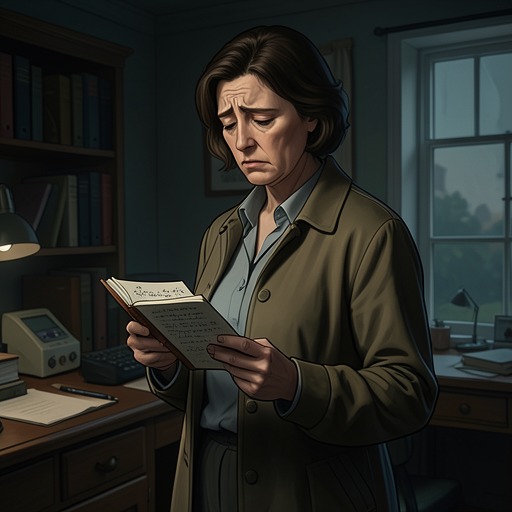
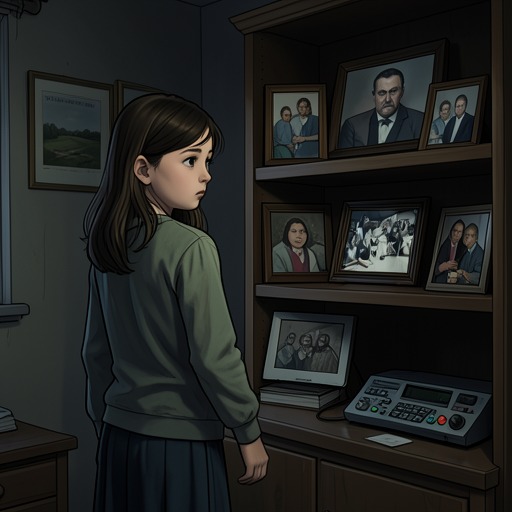
Tiny Beautiful Things: Advice on Love and Life from Dear SugarSugar’s children are young, curious listeners whose questions turn a Christmas pageant lesson into a sustained encounter with suffering. In the account of their early years, they are also the center of Sugar’s decisive, ambivalent choice to become a mother: loving the life she chose does not erase her awareness of the other life she gave up.
Identity and Introduction
The children are a son and a daughter, four and nearly six at the time of the Christmas pageant. Their names are not given. Sugar takes them to a reenactment of Jesus’s birth at a large Unitarian church, intending to introduce the holiday’s history rather than indoctrinate them into a religion. On the drive, they ask who Jesus is. Sugar explains his birth, his teaching about compassion, forgiveness, and love, his death, and the belief that he rose from the dead. Her own account of religion is limited: her mother had left Catholicism and rejected organized religion, and Sugar herself had no religious schooling as a child.
The children respond not by pursuing the pageant’s account of Jesus’s birth or his teachings, but by repeatedly asking about his death. For months, they ask to hear the story again, concentrating on the suffering involved. Their attention unsettles Sugar because she and Mr. Sugar had tried to shield them from much of the world’s cruelty. Yet she also recognizes that their questions have reached something they are ready to encounter: suffering as part of human life.
Questions About Suffering
The children approach the story through the human details they can grasp, not through its theological explanation. They do not focus on Jesus’s divinity or on the meaning of resurrection; to them, the story is about a man who suffered and died. Their son keeps asking whether Jesus’s feelings were hurt when people treated him cruelly. Their daughter wants to know where his mother was. The questions register different concerns—emotional pain and the presence of a parent—without turning either child into a spokesperson for a settled religious view.
Their persistent interest makes the story difficult for Sugar to dismiss as material they should not know. She first wonders whether telling it was a mistake, given how much she and Mr. Sugar had protected them from cruelty. Then she reads their attention as evidence that they are ready to learn something beyond the religious narrative: that terrible things happen, and that suffering is not an exception reserved for other people. The children’s questions thus become the occasion for Sugar to connect their developing understanding with the bewilderment adults feel when loss or crisis arrives in their own lives.
Motherhood and the Life Chosen
The children also stand at the center of Sugar’s retrospective account of becoming a mother. Despite the fears that accompanied her decision, she says she did not regret having a baby. The first weeks with her son made motherhood feel unmistakably real: holding him clarified something she had not been able to settle through thought alone. At the same time, she remembers being shaken by how close she had come to choosing a life without him. Becoming his mother felt like an ending and a beginning at once.
Looking back after seven years of raising her two children, Sugar can affirm her choice without pretending it made every alternative disappear. She wonders whom she might have nurtured, what creative or practical work her love might have served, and what she did or did not write while catching her children at the bottoms of slides, watching them balance on low brick walls, and pushing them on swings. She also imagines journeys she might have taken, including cycling across Iceland or hiking in Mongolia. These are questions, not claims that she would have been happier or more accomplished without children; she acknowledges that she cannot know what she did not choose.
Narrative Role and Significance
Sugar’s children help the memoir hold two truths together: her commitment to her actual family and her recognition that the unchosen life mattered too. Everyday details of caring for them—the playground, the swings, and the repeated work of attention—give that alternative life its weight without suggesting that motherhood was a mistake. Sugar describes the life she did not live as a ghost ship that never carried her, something to acknowledge rather than recover.
Their questions about Jesus similarly make large ideas intimate. A pageant intended as a history lesson becomes, through the children’s sustained focus, a way to consider vulnerability, grief, and the limits of protection. They do not resolve Sugar’s doubts about suffering; they sharpen her understanding that shielding children cannot mean keeping all knowledge of pain from them. Across these scenes, they are not merely evidence of her maternal identity. Their curiosity gives her a way to think about what a child can perceive, what a parent can explain, and how a chosen life can remain meaningful alongside the unknowable life left behind.